



FIFA World Cup brackets confuse a lot of fans every four years, and that’s not surprising. The tournament format keeps changing, and the jump to a 48-team field has made things even trickier. Whether you’re filling out a bracket for an office pool or just trying to understand how your favorite team advances, getting the structure right matters.
This guide breaks down everything you need to know about FIFA World Cup brackets in plain language. You’ll learn how the group stage feeds into the knockout rounds, where fans typically go wrong, and how to read a bracket like someone who’s been watching the tournament for years. No jargon, no fluff—just a clear walkthrough.
What Are FIFA World Cup Brackets?
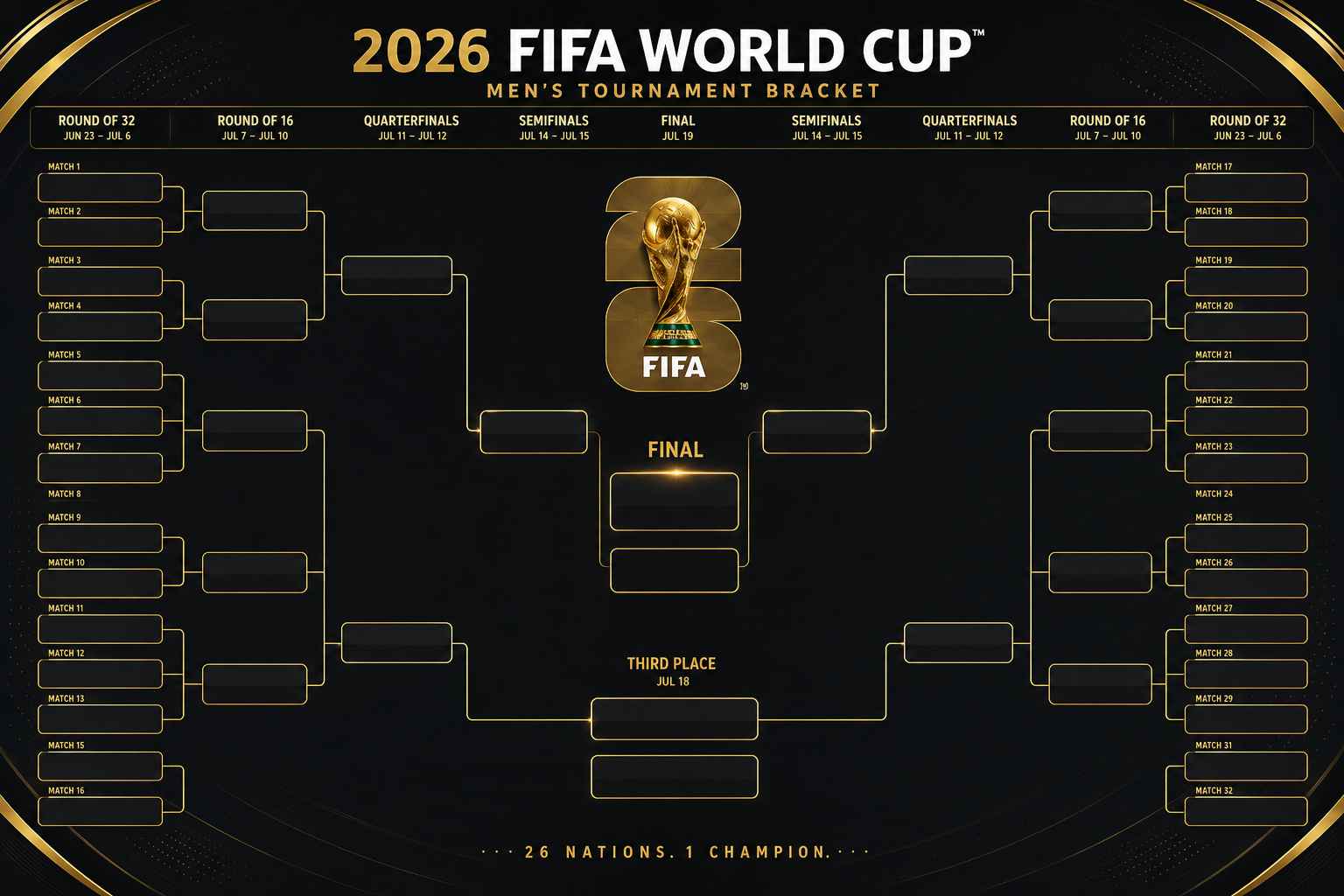
FIFA World Cup brackets are visual chart that maps out how teams progress through the tournament, from the opening group matches all the way to the final. Think of it as a roadmap. Each line represents a match, and each box represents a team moving forward—or getting eliminated.
Unlike single-elimination tournaments such as the NCAA basketball bracket, the World Cup bracket has two distinct phases. The first phase is the group stage, where teams play round-robin matches. The second phase is the true knockout bracket, where one loss ends a team’s run.
How the Tournament Format Works
The men’s World Cup expanded to 48 teams starting in 2026, a major shift from the previous 32-team format. This change reshaped how brackets are built and read.
The 48-Team Expansion Explained
Under the new structure, 48 nations are split into 12 groups of four. The top two teams from each group advance automatically. Additionally, the eight best third-place finishers also move on, creating a 32-team knockout bracket. That’s the same number of teams that used to make up the entire tournament.
This expansion means more matches, more storylines, and—frankly—more chances for fans to misread the bracket if they’re not paying attention to seeding rules.
Group Stage vs. Knockout Stage
The group stage rewards consistency. Teams earn points for wins and draws, and the standings determine who advances. There’s room for a bad result here and there, as long as a team recovers.
The knockout stage is unforgiving. Every match is win-or-go-home, decided by extra time and penalty kicks if needed. This is where brackets become essential, since fans need to track which winner plays which in the next round.
Reading a World Cup Bracket Correctly
A properly built bracket shows the Round of 32, Round of 16, quarterfinals, semifinals, third-place match, and the final. Each round halves the remaining field until two teams remain.
Following the Path to the Final
To read a bracket accurately, start at the group winners and trace each line forward. Pay attention to which side of the bracket a team sits on, since that determines potential matchups all the way through the semifinals. Two teams on the same side can’t meet until later rounds, which is a detail many casual fans overlook.
Benefits of Understanding the Bracket System
Knowing how the bracket works isn’t just trivia. It genuinely improves how you experience the tournament.
- You can predict realistic matchups instead of guessing randomly.
- You’ll understand why certain “easy” groups produce tough knockout draws.
- Bracket pools and prediction contests become far more enjoyable.
- You can follow news coverage and commentary without feeling lost.
- You’ll appreciate the strategy behind squad rotation and group-stage tactics.
Common Mistakes Fans Make
Even longtime soccer fans stumble when filling out brackets. Here are the errors that show up most often.
- Ignoring third-place qualifiers. Many fans forget that eight third-place teams advance, which changes the entire knockout picture.
- Misreading bracket sides. Confusing which half of the bracket a team belongs to leads to impossible predicted matchups.
- Overvaluing group-stage form. A team can top its group and still face a brutal knockout draw.
- Forgetting extra time and penalties. Brackets don’t show this, but it heavily influences which teams survive.
- Picking favorites blindly. Host nations and top-ranked teams don’t always advance as expected; upsets are part of the tournament’s identity.
Expert Tips for Filling Out Your Bracket
If you want your bracket predictions to actually hold up, keep these tips in mind.
First, study recent qualifying performances rather than relying purely on historical reputation. Form matters more than legacy. Second, factor in travel and climate, since matches played in unfamiliar conditions can wear teams down. Third, don’t ignore squad depth; tournaments stretch over weeks, and injuries pile up. Finally, track coaching changes, because a new manager can shift tactics dramatically right before kickoff.
Bracket Format Comparison Table
| Feature | Old Format (32 Teams) | New Format (48 Teams) |
|---|---|---|
| Groups | 8 groups of 4 | 12 groups of 4 |
| Teams advancing from groups | Top 2 per group | Top 2 + 8 best third-place teams |
| Knockout stage size | Round of 16 | Round of 32 |
| Total matches | 64 | 104 |
| Bracket complexity | Moderate | Higher |
Frequently Asked Questions
What is FIFA World Cup brackets?
FIFA World Cup brackets are a chart showing how teams move through the tournament, from group play into the knockout rounds. It visually tracks every matchup, helping fans follow which teams could meet in later stages. Brackets are widely used for prediction contests, office pools, and general fan engagement throughout the tournament.
How many teams qualify for the World Cup knockout stage?
In the current 48-team format, 32 teams qualify for the knockout stage. This includes the top two finishers from each of the 12 groups, plus the eight best third-place teams across all groups. That’s double the knockout field size compared to the older 32-team tournament structure.
Why did the World Cup expand to 48 teams?
FIFA expanded the tournament to give more nations a chance to compete on the world’s biggest stage. The change increases global participation, generates more revenue, and creates additional storylines. While some critics worry about diluted competition, supporters argue it grows the sport in regions that previously had limited representation.
How does seeding affect the bracket?
Seeding determines which group a team enters and influences potential knockout matchups. Higher-seeded teams are generally placed to avoid meeting other top teams until later rounds. However, seeding is based on rankings calculated before the tournament, so it doesn’t always reflect actual form once matches begin.
What happens if a knockout match ends in a draw?
If a knockout match is tied after 90 minutes, it moves to two 15-minute periods of extra time. If the score remains level, the match is decided by a penalty shootout. This rule applies to every round after the group stage, including the final.
Can two teams from the same group meet again in the knockout stage?
Yes, depending on bracket positioning, teams from the same group can face each other again later in the tournament, particularly in the semifinals or final. However, bracket design typically separates group rivals in the earliest knockout rounds to keep early matchups varied.
Where can I find an official FIFA World Cup brackets?
Official brackets are published on FIFA’s website once the group stage draw is completed. Many sports media outlets also release printable or interactive brackets closer to the tournament, which are useful for tracking predictions and following live results.
Is filling out a World Cup bracket similar to March Madness?
The concept is similar, since both involve predicting winners through elimination rounds. However, World Cup brackets are more complex because of the group stage and third-place qualifier rules, which don’t exist in single-elimination tournaments like March Madness.
Summary
FIFA World Cup brackets might look intimidating at first, especially with the expanded 48-team format, but the structure becomes simple once you understand the group stage and knockout flow. Knowing how teams qualify, how seeding works, and where common mistakes happen will make you far more confident the next time you fill one out. Ready to test your knowledge? Try mapping out a bracket for the next tournament and see how close your predictions come to reality.
Discover more trending content only on WorldSnipes.