


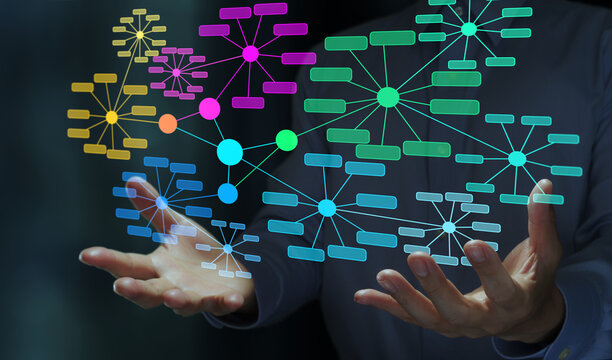
If you have been half-following AI headlines this year, you have probably noticed a quiet shift. Large language models are getting the spotlight, but knowledge graphs are doing the heavy lifting behind the scenes. The latest knowledge graph news 2026 cycle makes this obvious: enterprises are no longer treating graphs as a nice-to-have data experiment. They are treating them as core infrastructure for trustworthy AI.
This shift was on full display at the Knowledge Graph Conference (KGC) 2026, held May 4–8 at the Cornell Tech Executive Education Center in New York City. Practitioners from banking, healthcare, manufacturing, and government gathered to share what is actually working — and what still trips teams up. This article breaks down the biggest developments, why they matter, and how you can apply them, whether you are a data engineer, an SEO strategist curious about semantic search, or a business leader evaluating AI investments.
What Is Driving the 2026 Knowledge Graph News Surge?
Three forces are colliding right now: generative AI’s hallucination problem, the enterprise need for governed data, and the rise of autonomous AI agents. Knowledge graphs sit at the intersection of all three, which is exactly why knowledge graph news 2026 headlines keep pointing back to the same conference, the same vendors, and the same core idea — meaning matters more than raw model size.
At KGC 2026, described by organizers as the largest edition to date, this year’s event brought together attendees for a five-day program of workshops, masterclasses, and expert-led sessions on connected data. That scale alone tells you something: this is not a niche academic gathering anymore. It is where enterprise AI strategy gets decided, and it is why so much knowledge graph news 2026 coverage traces back to this single week in New York.
Knowledge Graphs as the “Semantic Backbone” for Agentic AI
If there is one theme tying together this year’s knowledge graph news 2026 coverage, it is the idea of a “semantic backbone.” The phrase of the year, without question, is “semantic backbone.” In his KGC 2026 keynote, Graphwise president Atanas Kiryakov argued that capturing meaning and unlocking enterprise information has become foundational infrastructure rather than a differentiating capability. In plain English: knowledge graphs used to be optional. Now they are table stakes.
Why Agentic AI Needs Structure, Not Just Scale
This matters because AI agents cannot reason reliably over messy, ungoverned data. A well-built graph gives agents a shared “world model” — a consistent map of entities, relationships, and business rules they can query instead of guess. Writer and knowledge engineer Giuseppe Futia summarized this trend after attending KGC 2026, noting that knowledge graphs act as the substrate on which production AI stands, rather than an alternative to LLMs or a replacement for machine learning. Sessions across the conference, from streaming architectures to clinical AI systems, kept landing on the same pattern: the language model handles bounded reasoning within a context window, while the graph maintains consistency across contextsEven more striking was the diagnosis of why AI projects fail. According to Futia’s recap, most production failures blamed on model limitations or prompt engineering are actually representation failures — once the right structure is encoded, the model stops needing to perform miracles. That is a meaningful reframe for any team stuck debugging prompts instead of fixing their data model.
GraphRAG Goes Mainstream
No knowledge graph news 2026 roundup would be complete without GraphRAG. GraphRAG — retrieval-augmented generation powered by graph structure instead of plain vector search — was arguably the single most repeated term at KGC 2026. Workshops walked attendees through the limitations of LLMs, vectors, and full-text search, followed by semantic layer theory and a live implementation walkthrough. The pitch is simple: vector search finds similar text, but GraphRAG finds related facts, which is a very different (and often more accurate) capability.
Vendors like metaphacts reinforced this in their own sessions, showing how a properly engineered semantic layer can prevent hallucinations and ground AI agents in specific business logic and enterprise context. This is the practical answer to a question every CFO eventually asks about AI: “How do we know it’s not making things up?”
A Real Enterprise Example
This is where knowledge graph news 2026 stops being theoretical and starts showing up in day-to-day operations. Consider a bank building a fraud-detection assistant. A pure LLM might describe suspicious transaction patterns in plausible-sounding but inaccurate language. A GraphRAG-powered assistant instead traces actual ownership chains, transaction paths, and regulatory flags stored in the graph — the same technique showcased in KGC sessions on using graph visualization to catch patterns of money laundering by identifying which nodes are central to sending and receiving funds.
RDF vs. Property Graphs: The Convergence Story
For years, the graph world has been split between RDF (standards-based, semantically rich) and labeled property graphs, or LPGs (fast, flexible, great for visualization). Knowledge graph news 2026 suggests the fight is ending in a truce rather than a winner.
The Enterprise Knowledge team’s KGC workshop introduced an “Extract, Interpret, Load, Reinterpret” pipeline designed for round-trip translation between the two formats. As the team explained, RDF provides semantics and standards while property graphs provide visualization, querying, and analytics, and the usual one-way migration between them quietly loses meaning. Their fix uses SHACL validation at the entry point, explicit mapping modes in the middle, and the ability to reinterpret data back into standards-compliant RDF with provenance preserved — essentially a fidelity contract so nothing gets lost in translation. It is exactly the kind of practical fix that keeps showing up in knowledge graph news 2026 coverage.
ArcGIS Knowledge 12.1 and the Rise of File-Based Graphs
Not all knowledge graph news 2026 headlines come from conference stages — some comes straight from product release notes. Esri’s ArcGIS Knowledge 12.1 update introduced File Knowledge Graphs, a new file-based format letting analysts build and explore graphs directly inside desktop applications without needing a full Enterprise deployment or Knowledge Server license.
This matters for smaller teams and field analysts who previously needed heavy infrastructure just to experiment with graph analytics. New geoprocessing tools also arrived, and tools such as Create File Knowledge Graph and Export Enterprise Knowledge Graph now support standardized, repeatable workflows for creating and moving graphs between local files and shared systems. Translation: graph analytics is getting more accessible, not less.
Digital Twins Get a Semantic Upgrade
Digital twins — virtual replicas of physical systems — were another hot topic dominating knowledge graph news 2026 discussions. At a KGC 2026 panel titled “From Knowledge Graphs to Digital Twins: Are Our Models Ready?”, Franz Inc. CEO Jans Aasman argued that digital twins need more than data integration or simulation; they require semantic models that capture relationships, constraints, provenance, context, and meaning across complex systems. This year’s conference theme, fittingly, was Make Your Enterprise Data AI Ready,” reflecting how organizations are moving past isolated AI pilots toward governed, explainable, operationally useful intelligence.
Benefits of Following Knowledge Graph News Closely
Staying current with knowledge graph news 2026 pays off in concrete ways:
- Fewer AI hallucinations: Grounded, structured data reduces false confidence in AI outputs.
- Better search visibility: Search engines and AI overviews increasingly reward structured, entity-rich content.
- Faster onboarding for new tools: File-based and low-code graph options (like ArcGIS’s update) lower the barrier to entry.
- Cross-team alignment: A shared semantic layer means engineering, compliance, and business teams speak the same language.
- Future-proofing: As agentic AI becomes standard, graph literacy becomes a competitive advantage.
Common Mistakes Companies Make with Knowledge Graphs
Even with all the positive knowledge graph news 2026 has brought, plenty of teams still stumble on the basics:
- Treating the graph as a side project. Graphs deliver value only when they are maintained, not built once and forgotten.
- Skipping data governance. Without validation rules like SHACL, bad data quietly corrupts the graph over time.
- Choosing RDF or property graphs dogmatically. As KGC 2026 showed, most mature teams now use both, not one exclusively.
- Ignoring provenance. If you cannot trace where a fact came from, your AI agent cannot be trusted to reason with it.
- Over-relying on vector search alone. Skipping graph-based retrieval leaves accuracy on the table.
Expert Tips for Staying Ahead
Practitioners who track knowledge graph news 2026 closely tend to share the same advice:
- Start small with a single high-value use case (fraud detection, compliance, or customer 360) before scaling graph-wide.
- Pair your LLM with a graph-grounded retrieval layer rather than relying on prompting alone.
- Build a “fidelity contract” for any RDF-to-property-graph migration, so no meaning gets lost.
- Revisit your data model before blaming your AI model when accuracy problems appear.
- Watch product updates (not just conferences) — vendor release notes are increasingly where practical innovation shows up first.
Comparison Table: RDF vs. Property Graphs vs. Vector Databases
To make sense of where the technology stands, here is a snapshot informed by this year’s knowledge graph news 2026 developments:
| Feature | RDF Knowledge Graphs | Property Graphs (LPG) | Vector Databases |
|---|---|---|---|
| Best for | Standards, semantics, interoperability | Visualization, fast traversal, analytics | Similarity search, unstructured text |
| Query language | SPARQL | Cypher / Gremlin | Embedding similarity (no formal query language) |
| Governance | Strong (OWL, SHACL) | Moderate | Weak |
| AI grounding accuracy | High | High | Moderate |
| Learning curve | Steeper | Moderate | Easiest |
| 2026 trend | Converging with LPG via round-trip pipelines | Gaining semantic validation tools | Increasingly paired with graphs (GraphRAG) |
Frequently Asked Questions
Here are the questions people ask most often about knowledge graph news 2026 and what it means for their teams.
What is the biggest knowledge graph news story in 2026?
The biggest story is the shift toward knowledge graphs as the “semantic backbone” for agentic AI. Instead of being a specialized data tool, graphs are now seen as necessary infrastructure that keeps AI agents grounded, consistent, and less prone to hallucination. This theme dominated the Knowledge Graph Conference 2026 and shows up repeatedly across vendor announcements throughout the year.
What is GraphRAG, and why is it trending?
GraphRAG combines retrieval-augmented generation with graph-based retrieval instead of relying solely on vector similarity search. It is trending because it retrieves related facts through actual relationships, not just semantically similar text, which produces more accurate and explainable AI answers — especially in regulated industries like finance and healthcare.
Are RDF and property graphs merging into one standard?
Not into a single standard, but into complementary workflows. Enterprise teams are increasingly using RDF for semantics and governance while using property graphs for visualization and analytics, connected through round-trip pipelines that preserve meaning during translation between the two formats.
How do knowledge graphs reduce AI hallucinations?
Knowledge graphs ground AI outputs in verified, structured facts and relationships instead of letting the model generate answers purely from patterns in training data. When an AI agent queries a graph before responding, it retrieves real, traceable information, which significantly reduces confidently wrong answers.
Do small businesses need a knowledge graph?
Not always, but accessibility is improving fast. Tools like ArcGIS Knowledge 12.1’s file-based graphs let smaller teams experiment without enterprise-level infrastructure. If your business relies on complex relationships between data — customers, products, locations, transactions — a lightweight graph can still deliver meaningful value.
What industries are adopting knowledge graphs fastest?
Banking, healthcare, manufacturing, and infrastructure management are leading adopters, based on sessions and case studies presented at KGC 2026. Fraud detection, clinical data reconciliation, and digital twin modeling were among the most discussed real-world applications this year.
How do knowledge graphs relate to Google’s AI Overviews and SEO?
Search engines and AI answer engines rely on structured, entity-rich data to generate accurate summaries. Content that clearly defines entities and their relationships (through schema markup and semantic structure) is easier for both traditional search and generative AI engines to interpret and cite correctly.
What is a semantic layer, and why does it matter?
A semantic layer is a governed translation layer that maps raw technical data to business meaning, making it understandable to both humans and AI agents. It matters because it lets non-technical teams and AI systems query data using natural business terms instead of needing to understand underlying database schemas.
Summary and Next Steps
The takeaway from this year’s knowledge graph news 2026 cycle is refreshingly consistent: structure beats size. Whether it is GraphRAG replacing plain vector search, RDF and property graphs converging through fidelity-preserving pipelines, or digital twins getting a semantic upgrade, the pattern is the same — organizations that invest in meaning, not just models, are the ones building AI systems people can actually trust.
If you are exploring how knowledge graphs could ground your own AI initiatives, start with one focused use case, choose your graph technology based on that use case (not ideology), and revisit these developments regularly, since this space is moving quickly. Bookmark this page and check back as more knowledge graph news breaks throughout the year.
Discover more trending content only on WorldSnipes.