

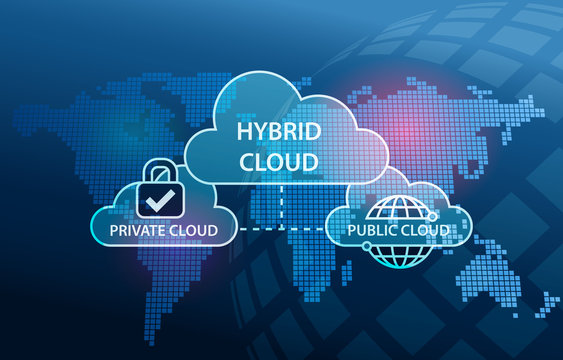
Still, you’ll notice a recurring theme: no single cloud setup ever satisfies every workload. If you’ve spent time with IT teams or cloud discussions, you know that some operations thrive in a public cloud, while others demand the tighter control of a private environment. Hybrid cloud architecture exists to bridge that gap. It’s not just a buzzword—it’s a practical way to combine multiple cloud environments and make them work together.
At its simplest, hybrid cloud architecture is a blend of private and public cloud resources. Companies can store sensitive information where they feel safest while using the public cloud’s scalability and flexibility for less critical workloads. It’s a balance of control, cost, and agility. But it’s not a magic button. Success depends on careful planning, monitoring, and understanding how your data and workloads interact across different environments.
How Hybrid Cloud Architecture Works in Real-World Practice
Picture a retail company running an e-commerce platform. Customer profiles, payment details, and sensitive transactional data stay in a private data center. Meanwhile, the public cloud handles spikes in web traffic during flash sales, product launches, or holiday shopping seasons. When the rush is over, the company scales back public cloud resources to save costs. That’s the main appeal—you don’t have to overpay for maximum capacity all the time.
Technically, hybrid cloud architecture relies on secure connections between private infrastructure and public clouds. This could be a virtual private network (VPN) or a dedicated line like Amazon Web Services Direct Connect or Azure ExpressRoute. On top of that, unified management tools orchestrate workloads across both environments. They handle moving data, deploying applications, and monitoring performance. Sounds simple in theory, but in practice it requires attention to detail. Without proper monitoring, latency and backups can quickly become problematic.
Key Benefits of Implementing Hybrid Cloud Architecture
One major advantage of hybrid cloud architecture is flexibility. It allows companies to experiment with new workloads in the public cloud without touching core, sensitive systems. For example, a fintech company could run predictive algorithms on anonymized data in a public cloud sandbox while keeping original client records private.
Cost efficiency is another real benefit. Instead of buying enough servers to handle peak demand, hybrid setups let you scale dynamically. This alone can save companies tens of thousands of dollars annually. Security is easier to manage as well. Sensitive workloads stay under direct control, helping meet regulatory and compliance requirements.
Disaster recovery improves too. With hybrid clouds, private workloads can have cloud-based backups ready to take over if an on-premises system fails. This provides operational resilience that purely private or public systems struggle to match.
Performance optimization is easier when you understand workload patterns. Less critical, compute-heavy jobs can be offloaded to the public cloud during off-peak hours or peak demand, leaving core private systems free to handle sensitive or latency-sensitive tasks.
Challenges and Risks You Need to Be Aware Of
Hybrid cloud architecture isn’t without its headaches. Integrating private and public clouds can be complex. Different APIs, security protocols, and storage formats can make operations messy if you’re not careful. Without proper governance, a cloud computing can quickly become a management nightmare.
Latency is another consideration. Performance may suffer if workloads constantly shift between environments. Network infrastructure, monitoring tools, and orchestration systems all need to be precisely tuned. Security must be aligned across both clouds, or hybrid setups can become a weak point instead of a strength.
Compliance adds another layer of complexity. Data sovereignty rules vary by country, and sensitive data may not leave certain regions. Hybrid cloud architecture can address these requirements, but only if companies are deliberate about workload placement and access control.
Real-World Use Cases Where Hybrid Cloud Excels
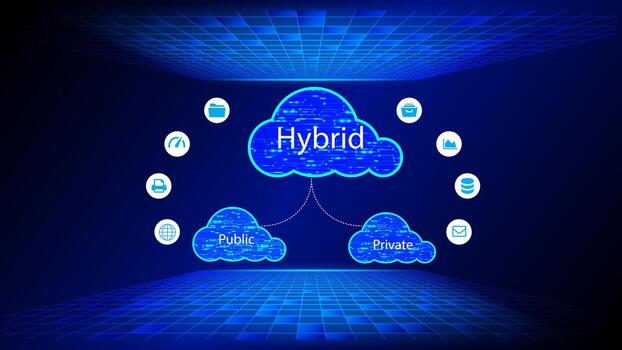
Hybrid cloud architecture shines where some workloads demand strict control while others benefit from public cloud scalability. Healthcare is a prime example: patient records remain in private databases, while anonymized analytics run in the public cloud.
Retailers, especially e-commerce platforms, leverage hybrid clouds for variable business surges. Black Friday is a classic scenario: private servers manage core business operations while public cloud resources handle traffic spikes. Government agencies also use hybrid approaches to balance secure internal processes with publicly accessible services.
The theme is clear: hybrid cloud architecture works best when organizations understand which workloads require tight control and which can safely leverage public cloud flexibility.
Planning Strategies for a Successful Hybrid Cloud Deployment
Proper planning is pivotal. Companies need to classify workloads as sensitive, critical, or non-critical, and match each to the right environment. Sensitive workloads generally stay private, while non-critical or highly variable workloads run in the public cloud.
Choosing compatible tools and platforms is equally important. Many hybrid-ready platforms exist, but not all integrate seamlessly with on-premises infrastructure. Poor integration can turn flexibility into frustration. Security is also crucial. Systems must be aligned across both environments—misalignment can create vulnerabilities.
A realistic plan also involves monitoring, disaster recovery strategy, and ongoing performance reviews. Without these, hybrid clouds risk being more theoretical than practical.
Emerging Trends Shaping Hybrid Cloud Architecture
Hybrid cloud architecture continues to evolve. Containers and Kubernetes make it easier to deploy workloads across multiple clouds without rewriting applications. Companies can now treat cloud environments as interchangeable resources rather than fully separate systems.
Edge computing is another factor shaping hybrid models. Data is processed closer to the user, sometimes locally, sometimes in private data centers, and sometimes in public clouds. This creates multi-layered hybrid setups that require thoughtful design to avoid latency or redundancy issues.
Automation and AI-driven orchestration are becoming more common. Workloads can automatically shift based on cost, demand, or compliance. These tools make hybrid clouds more effective but also require skilled staff to manage.
Practical Advice for IT Teams Implementing Hybrid Clouds
Hybrid cloud architecture isn’t a magic solution. It works best when organizations understand their workloads, compliance obligations, and cost considerations. Done properly, it allows businesses to scale without overcommitting resources. Done poorly, it becomes a management headache.
For IT teams, the key is treating hybrid clouds not just as technology, but as a framework for operational flexibility. You’re not buying a product—you’re building a system. Proper integration, aligned security, and vigilant monitoring are far more valuable than simply following the latest cloud trend.
Conclusion: Why Hybrid Cloud Architecture Provides a Strategic Advantage
Hybrid cloud architecture is more than a convenience. For companies navigating variable workloads, sensitive data, and cost pressures, it provides a strategic advantage. It’s not perfect—there will always be trade-offs in performance, complexity, or cost. But for organizations willing to invest in planning and governance, the hybrid model offers a balance few other IT strategies can match.
It’s also a model that scales with business requirements. Start small, test workloads, identify pain points, and gradually expand. Unlike rigid architectures, hybrid clouds allow businesses to evolve without massive upfront investment.
Hybrid cloud architecture gives companies a way to balance control, flexibility, and cost. By combining private and public cloud resources thoughtfully, organizations can scale operations efficiently, maintain data security, and adapt to changing business demands. The most successful implementations rely not on a single tool or platform—but on planning, governance, and constant attention. Done right, hybrid cloud architecture isn’t just a choice; it’s a practical framework for modern IT operations.
For more insights on developer tools, dependency management, and practical ways to keep your codebase clean and efficient, visit our homepage at Worldsnipes.
