

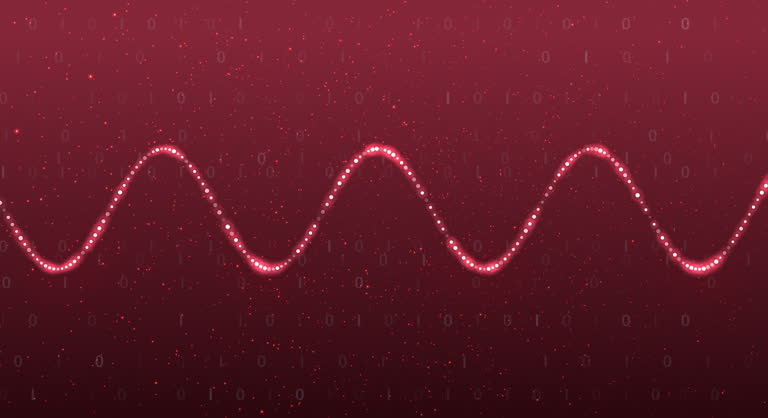
Analog signals remain a fundamental part of electronics and communication systems, even in an era dominated by digital technology. They represent information through continuous variations in voltage, current, or frequency, allowing systems to capture real-world phenomena such as sound, temperature, and light with natural precision. From radio transmission to audio recording and sensor technology, these continuous waveforms still play a crucial role in how devices interact with the physical world.
Understanding Analog Signals in Simple Terms
To understand how modern electronics work, it helps to first grasp the idea behind analog signals. These signals represent information as smooth and continuous waves rather than discrete steps. In practical terms, this means the signal can take any value within a given range instead of jumping between fixed levels.
Think about sound from a musical instrument. The vibrations in the air change smoothly over time. When a microphone captures this sound, it converts those vibrations into a continuous electrical waveform. That waveform is a perfect example of how information can be represented in a natural and uninterrupted form.
This continuous behavior makes traditional waveforms particularly useful for capturing subtle variations in physical environments. Temperature sensors, pressure sensors, and microphones often rely on this type of signal because it mirrors real-world changes with high accuracy.
The Fundamental Nature of Continuous Electrical Signals
In electronics, signals are simply carriers of information. Continuous electrical signals vary smoothly over time and can represent countless intermediate values. This characteristic allows them to convey fine details that might be lost when information is broken into separate steps.
For example, when an audio signal travels from a microphone to an amplifier, every small vibration of sound is represented by a corresponding change in voltage. This produces a flowing waveform that accurately reflects the original sound.
These types of signals are often visualized as sine waves or other curved patterns on an oscilloscope. The shape, amplitude, and frequency of the waveform determine the information being transmitted. Engineers analyze these properties to design communication systems, audio equipment, and measurement devices.
Why Continuous Waveforms Capture Real-World Phenomena Better
This is one reason why analog signals remain extremely valuable in sensing applications. Devices that measure pressure, humidity, sound, and motion often generate voltage outputs that vary continuously in response to environmental changes.
These signals can then be amplified, filtered, or converted into digital form if needed. The ability to directly represent real-world variations gives them an advantage in systems where precision and detail are essential.
A Brief History of Early Communication Systems
Before digital technology became widespread, nearly all communication systems relied on continuous electrical transmission. Early radio broadcasting, telephone networks, and television signals operated entirely using waveform-based methods.
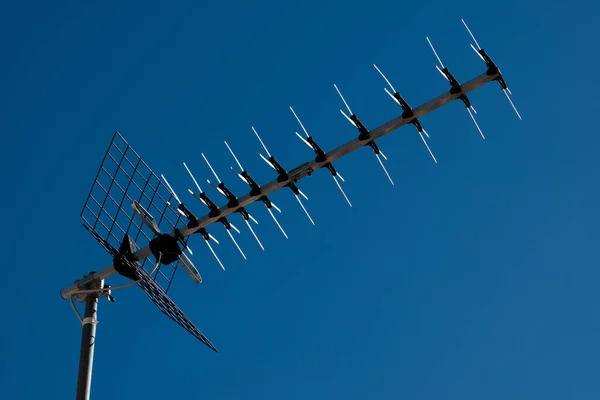
In the early twentieth century, radio engineers discovered that audio could be transmitted over long distances by modulating a carrier wave. Techniques such as amplitude modulation and frequency modulation became the backbone of global broadcasting.
Even today, FM radio still uses this method to deliver high-quality audio. The sound is encoded into a smoothly varying waveform that travels through the air as electromagnetic energy.
Although digital communication has expanded dramatically, these older transmission principles continue to influence modern technologies.
The Relationship Between Analog and Digital Systems
Many people assume digital technology has completely replaced earlier signal forms. In reality, most electronic systems rely on both.
Microphones, cameras, and environmental sensors often produce analog signals first. These are then converted into digital data using devices called analog-to-digital converters. The digital information can be stored, processed, or transmitted efficiently by computers and microcontrollers.
When the data needs to be played back through speakers or displayed as sound or light, the process is reversed using digital-to-analog conversion. This two-way relationship means that continuous waveforms act as the bridge between physical reality and digital processing.
Without this conversion process, modern computing systems would struggle to interact with the outside world.
Key Characteristics Engineers Analyze
When working with electrical waveforms, engineers typically evaluate several important properties that define how a signal behaves. Amplitude represents the strength or magnitude of the signal. Frequency determines how quickly the waveform oscillates. Phase describes the relative timing of the wave compared with another reference signal.
These characteristics influence how information is transmitted and received. In audio systems, amplitude relates to loudness while frequency determines pitch. In communication systems, carefully controlled frequencies allow multiple channels to share the same transmission medium without interference.
Understanding these properties helps engineers design filters, amplifiers, and receivers that can maintain signal quality over long distances.
Real-World Applications That Still Depend on Them
Even though digital systems dominate computing, many practical technologies still rely on continuous electrical representation.
Professional audio equipment uses high-quality waveform processing to maintain rich sound fidelity. Musical synthesizers shape electrical waves to create complex tones. Radio broadcasting continues to transmit voice and music using modulation techniques developed decades ago.
Medical devices provide another important example. Heart monitoring equipment and diagnostic sensors detect subtle electrical changes within the body. These variations are often captured as analog signals, allowing doctors to observe detailed patterns that might reveal health conditions.
Scientific measurement tools also depend heavily on these signals. Instruments used in laboratories measure voltage changes from sensors to detect temperature shifts, radiation levels, or chemical reactions.
Advantages That Keep Them Relevant
One of the biggest advantages of continuous waveforms is their ability to represent information naturally. Because they do not require quantization into fixed steps, they can preserve fine details when capturing real-world data.
Another benefit is simplicity in certain types of circuitry. Basic amplifiers and filters can process signals directly without complex digital processing. This can make some systems faster or more energy efficient, especially in specialized hardware.
Noise resistance can also be improved in specific designs. While digital communication uses error correction, carefully engineered waveform transmission methods can maintain quality over long distances with minimal distortion.
For these reasons, engineers still rely on analog signals in applications where smooth representation and immediate response are important.
Challenges and Limitations
Despite their strengths, continuous electrical waveforms do come with challenges. They are more vulnerable to noise and interference from external sources such as electromagnetic radiation. Over long distances, signal quality can degrade if proper amplification and filtering are not used.
Digital systems often handle data storage and error correction more effectively. Once information is converted into binary form, it can be copied or transmitted repeatedly without gradual loss of quality.
Because of this, modern systems frequently combine both approaches. The initial measurement may rely on analog signals, but processing and storage often occur in digital form.
This hybrid model provides the best balance between accuracy and efficiency.
The Future Role in Emerging Technology
As Technology advances, the importance of signal conversion continues to grow. Smart devices, environmental monitoring systems, and Internet of Things sensors all depend on physical measurements from the real world.
Every time a smart thermostat measures temperature or a wearable device tracks heart activity, continuous electrical waveforms are involved at some stage. Engineers then convert those readings into digital information for analysis.
In advanced communication research, scientists are also exploring new modulation techniques that blend traditional waveform behavior with digital encoding. These hybrid approaches aim to improve bandwidth efficiency and reduce power consumption.
Because real-world phenomena are inherently continuous, analog signals will remain essential for capturing accurate data.
Why Engineers Still Study Them
Electrical engineering students spend significant time studying waveform behavior because it forms the foundation of communication theory, signal processing, and electronic design.
Concepts such as filtering, amplification, modulation, and noise reduction all originate from the study of continuous signals. Even when systems are ultimately digital, understanding how physical signals behave helps engineers design better converters and sensors.
The ability to interpret waveforms also plays a critical role in troubleshooting electronic circuits. Oscilloscopes allow engineers to visualize voltage changes in real time, revealing problems that might not be obvious through digital diagnostics alone.
Conclusion
Although digital technology has transformed computing and communication, continuous electrical representation remains deeply embedded in modern electronics. Analog signals serve as the bridge between physical reality and digital processing, allowing devices to capture sound, temperature, motion, and countless other forms of data.
From early radio transmissions to modern medical sensors and smart devices, these waveforms continue to shape how technology interacts with the world. Their ability to represent subtle variations with natural accuracy ensures they will remain relevant for many years to come.
Explore more technology insights at Worldsnipes.
