

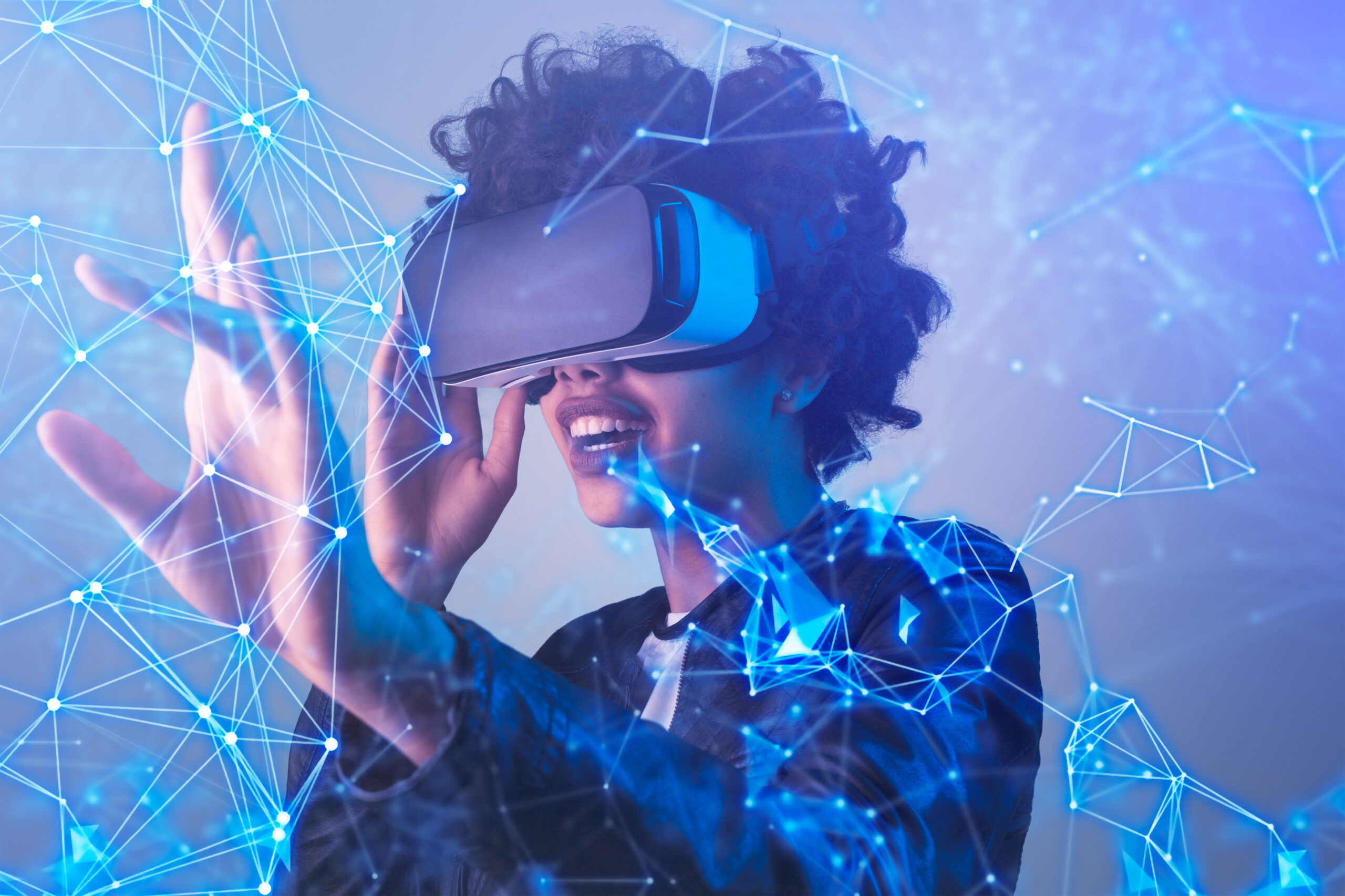
Training has always struggled with the same problem: how do you prepare people for real situations without exposing them to real threat, real cost, or real mistakes? That question sits at the heart of extended reality training, an approach that blends physical and digital environments to simulate real-world experiences.
If you’ve heard the term but are not completely sure what it means, you’re not alone. This article explains what extended reality training is, how it works in practice, where it is already being used, and why many organizations now see it as a practical learning tool rather than a futuristic experiment.
The goal is not to showcase flashy technology. It is to understand how immersive training changes the way people learn skills that traditionally required classrooms, manuals, or expensive hands-on practice.
What Is Extended Reality Training?
Extended reality training, often shortened to XR training, refers to learning experiences built using virtual reality (VR), augmented reality (AR), or mixed reality (MR). Instead of reading instructions or watching demonstrations, learners enter interactive environments where they perform tasks themselves.
The difference is simple but important. Traditional training explains. XR training allows people to experience.
A technician can practice repairing equipment without touching a real machine. A medical student can repeat procedures safely without pressure. A warehouse worker can learn safety protocols while moving through a simulated facility that behaves like the real one.
Once the experience begins, the technology fades into the background. What remains is practice, repetition, and feedback.
Why Traditional Training Methods Often Fall Short
Most training programs rely on lectures, slides, or demonstrations followed by real-world application. The gap between learning and doing can be surprisingly large.
People quickly forget instructions when they do not apply them immediately. Manuals rarely capture the stress or unpredictability of real situations. Hands-on training is effective but can be expensive or risky depending on the industry.
In fields such as aviation or emergency response, mistakes during training are not minor inconveniences. They can carry serious consequences. XR creates an environment where failure becomes useful rather than dangerous.
It does not replace instructors. Instead, it gives learners a rehearsal stage before real performance.
How Extended Reality Training Actually Works
Behind the scenes, XR training combines hardware, software, and instructional design. From the learner’s perspective, the process feels simple.
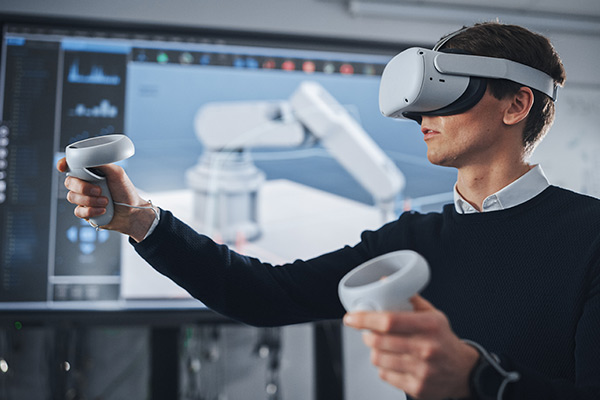
A user wears a headset or uses AR-enabled devices. The system places them inside a simulated environment or overlays digital guidance onto the real world. Interaction happens through hand tracking, controllers, or voice commands.
The system records decisions, timing, accuracy, and behavior. Trainers then review performance data to understand how someone learns, not just whether they passed.
This feedback loop is where XR becomes powerful. Instead of guessing where someone struggled, trainers can see it clearly.
VR, AR, and MR in Training Environments
Virtual reality creates fully immersive environments. It works best when real settings are inaccessible or dangerous, such as offshore drilling platforms or surgical simulations.
Augmented reality adds digital instructions to physical surroundings. For example, a maintenance worker might see step-by-step guidance projected onto equipment while working.
Mixed reality blends both approaches, allowing virtual objects to interact with real environments. This format is especially useful for collaborative training sessions.
Each technology serves different goals, which is why organizations rarely rely on only one format.
Industries Adopting Extended Reality Training
The adoption of extended reality training happened gradually, often solving practical problems rather than following technology trends.
Healthcare uses XR for surgical preparation and patient-care simulations, helping students gain confidence before entering high-pressure clinical environments.
Manufacturing companies use immersive simulations to teach equipment operation. Employees learn faster because they practice procedures instead of memorizing them.
Retail and customer service sectors simulate difficult customer interactions so employees can rehearse conversations safely.
Education is also evolving. Some schools now use immersive history lessons and science simulations that allow students to explore environments rather than imagine them.
Organizations typically adopt XR for practical reasons such as reducing training time or improving retention.
The Learning Psychology Behind XR Training
People remember experiences more strongly than explanations. XR provides a scalable way to design meaningful experiences intentionally.
Immersion increases focus because distractions fade when learners feel present inside an environment. Decision-making becomes emotional rather than theoretical, strengthening memory formation.
Another important benefit is confidence. Repeated practice in a safe space allows learners to make mistakes privately, reducing anxiety when facing real tasks later.
Learning shifts from evaluation toward experimentation.
Benefits and Limitations Worth Considering
Extended reality training offers clear advantages but is not a universal solution.
It improves engagement, supports remote learning, and ensures consistent training across locations. Every learner can experience the same scenario without logistical complexity.
Costs may decrease over time since simulations can be reused indefinitely after initial development.
However, XR is not ideal for every skill. Some tasks require real tactile feedback or unpredictable human interaction. Poorly designed simulations can feel gimmicky, and motion discomfort may affect a small number of users.
Effectiveness depends more on thoughtful instructional design than on technology itself.
The Future Direction of Extended Reality Training
The next phase of XR training will likely feel less dramatic and more integrated into daily workflows.
Headsets are becoming lighter, and software continues improving realism without requiring massive computing power. Artificial intelligence is beginning to personalize training scenarios in real time, adjusting difficulty based on performance.
Eventually, extended reality training may stop being labeled as XR altogether and simply become another standard learning method, much like video training today.
The real shift is cultural rather than technological. Organizations are moving from knowledge delivery toward experience-based learning.
FAQ Extended Reality Training
Is extended reality training expensive to implement?
Initial costs can be higher than traditional training materials because of hardware and development requirements. However, long-term savings often come from reduced travel, fewer physical resources, and faster onboarding.
What skills are best suited for XR training?
Procedural, spatial, and safety-focused skills benefit the most. Examples include medical procedures, equipment operation, emergency response, and technical maintenance.
Do learners need technical expertise to use XR systems?
Usually not. Modern systems are designed to be intuitive, and most users adapt within minutes even without prior experience.
Can extended reality training replace instructors?
No. XR works best as a complement to human teaching. Instructors guide reflection, discussion, and deeper understanding after immersive practice.
Is XR training effective for remote teams?
Yes. Distributed teams can share identical training environments regardless of location, making XR especially valuable for global organizations.
A Different Way to Think About Learning
Extended reality training matters not because it feels futuristic but because it changes how people prepare for real work. Learning and practice happen at the same time instead of separately.
Training stops feeling like a routine obligation and becomes a meaningful experience.
As technology becomes more accessible and less noticeable, extended reality training will likely move from novelty to normal practice. The true innovation will not be the headsets or simulations but the realization that people learn best when they can step inside the lesson rather than observe it from the outside.
Stay updated and explore more amazing content on the WorldSnipes.
